Writing
Transcending Photorealism
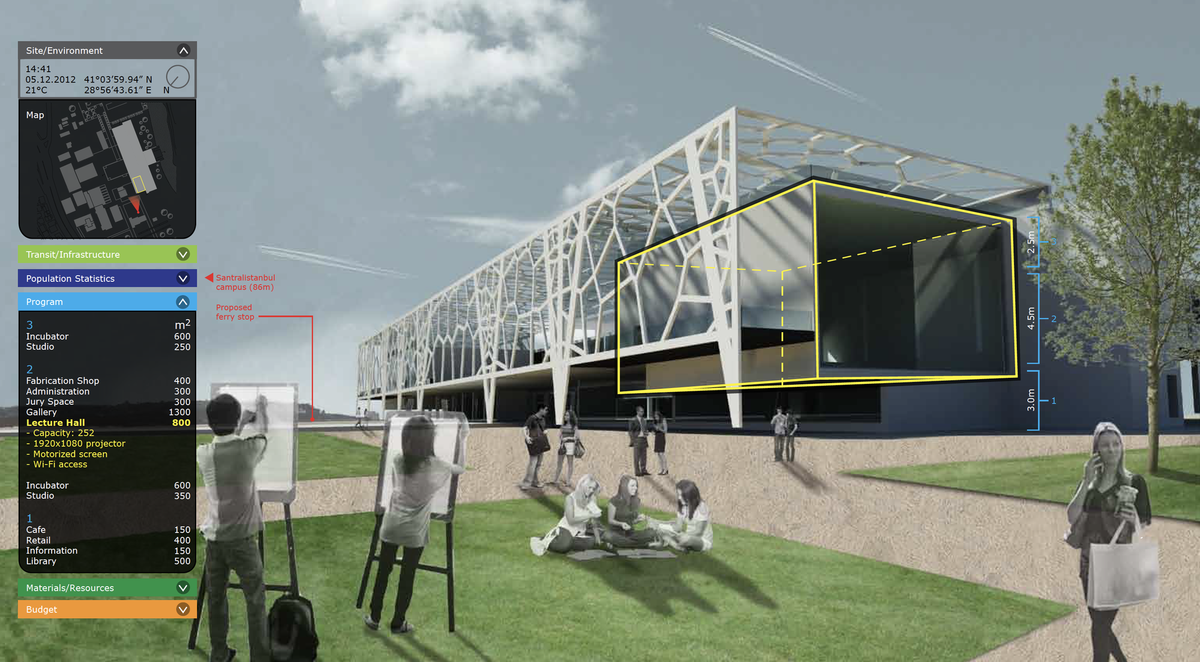
Since the introduction of Adobe Photoshop and 3D Studio Max in the early to mid-1990s, we have become exceedingly efficient at producing jaw-dropping photorealistic renderings. However, with our greater capabilities, we have also become increasingly skilled at misleading people with idealized versions of reality. While they are undeniably appealing, cheerful and glamorous people, perpetually radiant sunlight, fully matured foliage, and unblemished building materials all seem detached from the real world. Despite our ability to (nearly) perfectly replicate reality, renderings are still somehow inadequate. Where do we go from here?
What’s better than reality? Augmented reality (AR), of course. Companies like Layar, Metaio, and Google are experimenting with this ground-breaking technology that could influence the direction of future architectural renderings.
Augmented reality systems superimpose digital information (video, graphics, GPS data) over something we are actually seeing. The most common example of this idea (at least for sports fans) is the yellow line that shows the first-down marker when you’re watching a football game on TV. The technology is only beginning to gain commercial traction, but architects should begin to prepare for its mainstream adoption.
While architects have traditionally relied on static renderings to communicate their ideas, augmented reality has the potential to embed virtually unlimited amounts of data into these formerly fixed images. Viewing renderings through an AR interface could dramatically increase our ability to reveal hidden truths about buildings, to visualize more meaningful relationships between a building and its context, and to gain a more comprehensive understanding of architecture as part of a larger ecological system. These particular pictures are worth much more than a thousand words.
Renderings can now become more than just ‘pretty pictures.’ Relevant information can be accessed as needed to create presentations that are rich with multimedia content. This data can range from the utilitarian (how far is the nearest subway station?) to the superfluous (how are the reviews for that restaurant across the street?). Different questions surface in different contexts—what is the net square footage? How much do the building materials cost (with comparisons to alternatives)? What are the energy specifications of the appliances? How much heat does the user lose through those windows? The interactive display of previously hidden information prevents clients from relying solely on a potentially misleading representation of a building.
Now that software development has brought us to the technological pinnacle of photorealism, we must adapt our approach to provide an even more complete picture of new buildings. Augmented reality can transcend photorealism and has truly exciting implications for architects in the future.
This essay was originally published in CLOG: Rendering (2012).