Projects
Reduce, Reuse, Rebel!
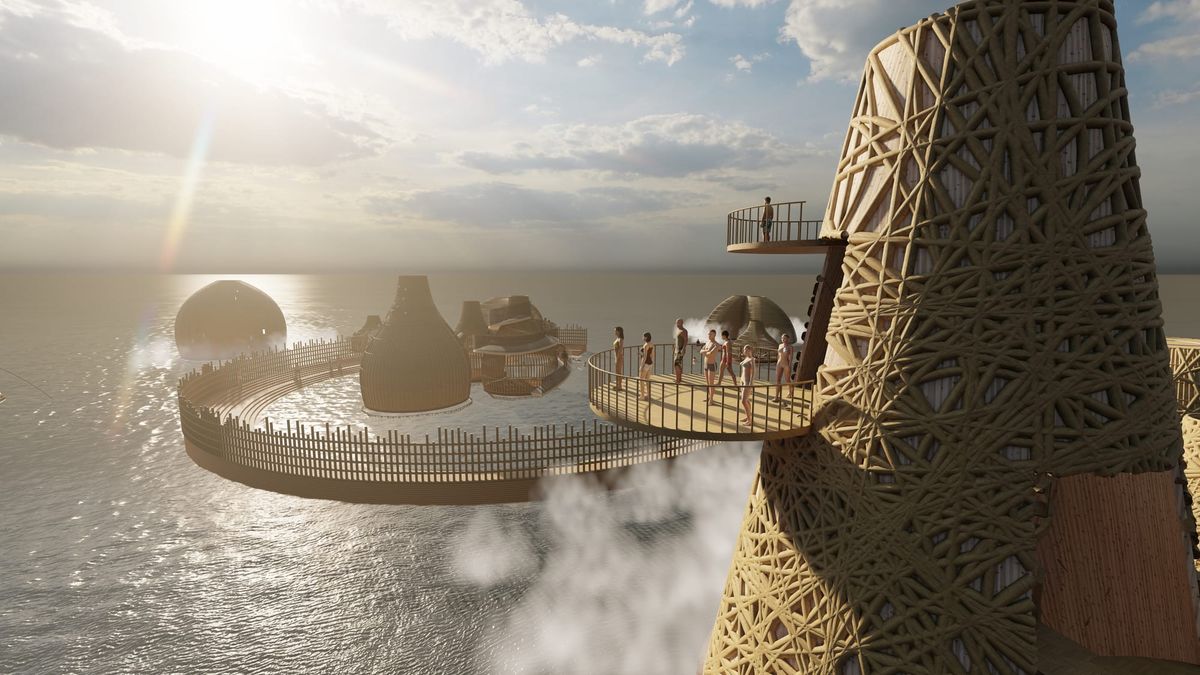
INTRODUCTION
Carbon-based fuels--coal, oil, and natural gas--have largely defined and profoundly impacted our modern way of life. Since the beginning of industrialization in the 1800s, fossil fuels’ colossal capacity for energy generation has led to enormous economic growth but also devastating environmental destruction.
While the polluting effects of industrialization were understood much earlier, a significant cultural backlash to fossil fuels did not emerge until the 1960s. Rachel Carson’s 1962 book Silent Spring, the establishment of ‘Earth Day’ as an annual holiday, and the coining of the phrase “reduce, reuse, recycle,” marked the beginning of the modern environmental movement and a collective resistance to the forces of industry and the relentless growth of capitalism.
Fossil fuel corporations were not going to relinquish their power willingly. They adopted a variety of strategies for delaying action on climate change–downplaying the risks, “buying” politicians, shifting the blame to individual consumption habits, etc.–and so, despite encouraging regulations like the passing of the Clean Water Act, the Air Pollution Control Act, and the Endangered Species Act, minimal progress was made to curtail carbon emissions.
Alarmed by projections from organizations like the Intergovernmental Panel on Climate Change (IPCC) and frustrated by the slow pace and limited effectiveness of traditional political reform, climate activists grew increasingly desperate, and this led to more radical and confrontational methods of protest. Several members of the Earth Liberation Front, for example, burned down timber mills, an SUV dealership, and a ski resort in the 1990s and were subsequently designated a domestic terrorist group in the United States (even though no one was killed). After a fierce crackdown from law enforcement, the environmental movement stalled. However, in recent years, a growing number of questionable corporate net-zero pledges, the increasing popularity of (and skepticism toward) carbon offsets, and continued inaction on climate justice initiatives have infuriated a new generation of activists.
One of the most prominent climate groups today is called Extinction Rebellion (XR), a movement that aims to “halt mass extinction and minimize the risk of social collapse.” XR describes itself as a decentralized, international, and politically non-partisan movement using non-violent direct action and civil disobedience to persuade governments to act justly on the Climate and Ecological Emergency. It aims to dismantle the power structures that have created the unequal and damaging world in which we live. The founders of XR also believe that it is “a rebellion for young people” as they will face the most extreme effects of climate change in their future.
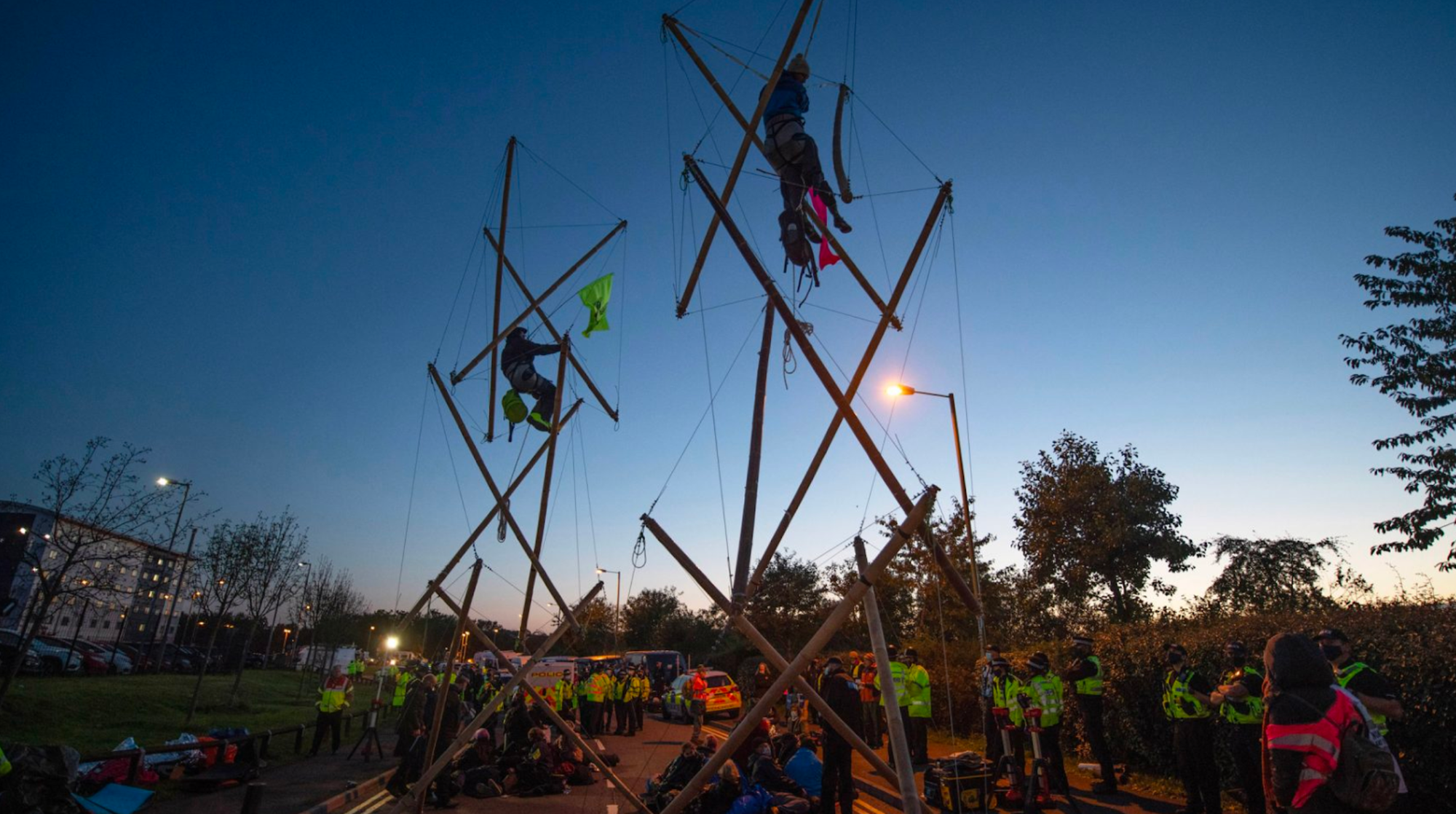
The construction industry’s reliance on fossil fuels has played a crucial role in the climate crisis. According to the U.S. Green Building Council, nearly forty percent of carbon dioxide emissions from fossil fuels are attributed to building construction, maintenance, and demolition. In order to effectively tackle climate change, we must reimagine the way buildings are conceived and executed, and we must interrogate the multi-scalar carbon systems that simultaneously enable contemporary architectural production and destroy the natural world.
What can we do, both individually and collectively, to mitigate the damage caused by human activity on this planet? How can design support activist efforts? What agency do we have as designers? What are the possibilities for a new architecture of activism? In this studio, a new form of socially and environmentally responsible architecture firmly aligns with the urgent objectives of Extinction Rebellion.
PHASE 1 - Revisiting Routines
“Limits on the freedom to live in energy-inefficient homes connected by car-dominated motorways. Limits on the freedom to make tedious commutes to sedentary office jobs. Limits on the freedom to mass-farm animals. Limits on the freedom to cram into budget airline cabins and travel at enormous speeds to fleeting foreign holidays. How many of the freedoms promised to the citizens of wealthy societies are really worth fighting for?”
- Phineas Harper, “More than Enough” (2021)
Residents of first-world nations have long contributed the highest proportion of carbon emissions, but the developing world is quickly catching up. How do our lifestyle choices impact our carbon footprints? How do our individual decisions have an impact beyond ourselves? As a very small sample, you are encouraged to consider how your carbon emissions are affected by where and how much you drive, where and how often you vacation, who lives with you, what you do for fun, what and how much you buy, what you throw away, what you wear, and what you eat. These activities may be (but are not limited to) daily, weekly, monthly, or yearly routines.
In the first phase of the studio, you will reflect on your own personal habits. A thorough examination and documentation of your energy and material consumption habits, academic and recreational activities, and travel tendencies will help to chart potential paths forward in your project.
PHASE 2 - Multi-scalar Systems
“We have a duty to disobey this system which destroys life on earth and is deeply unjust.”
- Extinction Rebellion
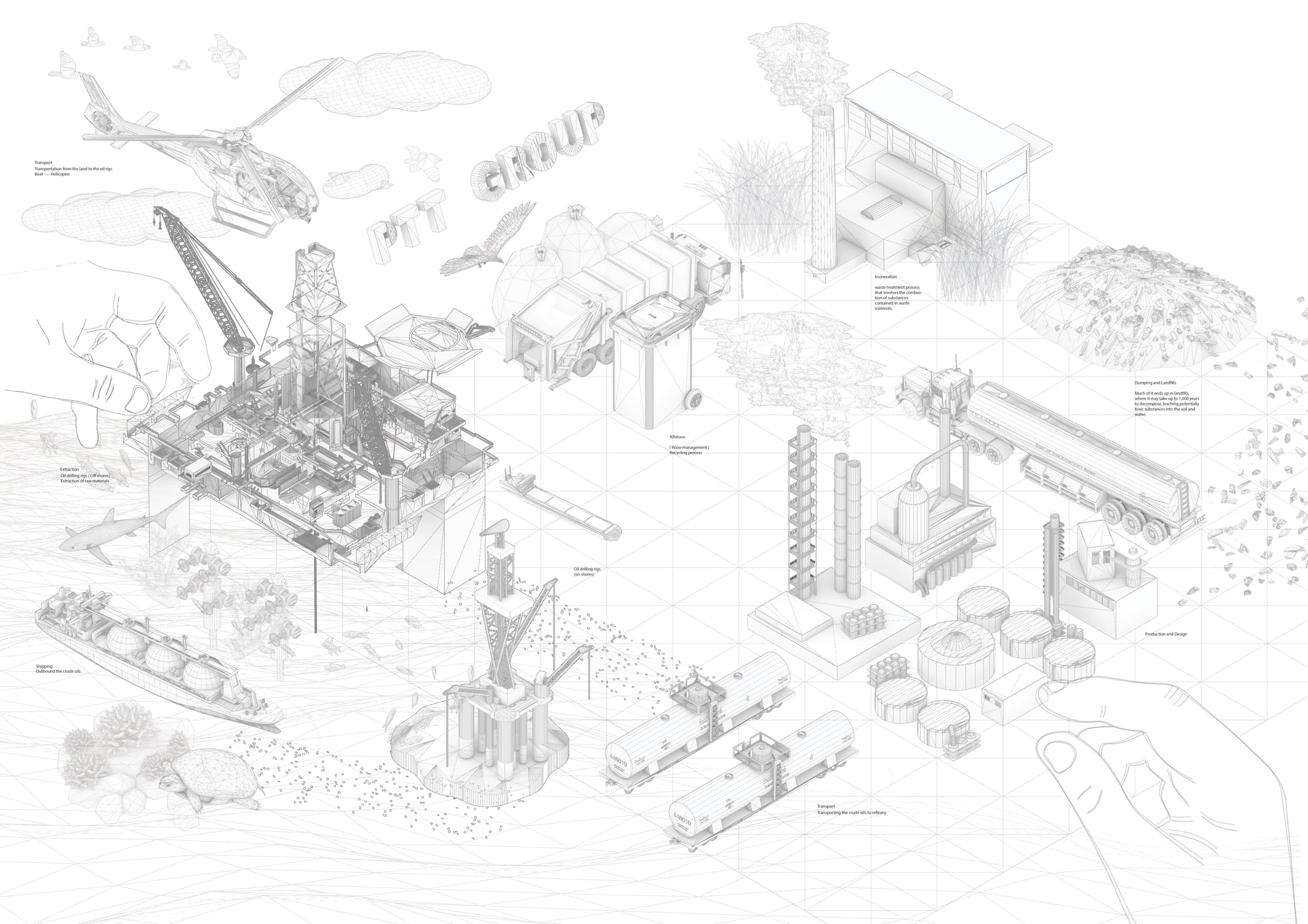
In its mission statement, Extinction Rebellion refers to a singular “system which destroys life on earth and is deeply unjust.” This system, in fact, consists of many constituent parts, and in phase 2, we will focus on identifying and understanding how our individual actions (from phase 1) affect and relate to the larger socio-cultural, economic, and environmental systems that are contributing to the destruction of our world. These include systems of resource extraction, energy generation, food production, wealth accumulation, material processing, personal transportation, supply chains, and media dissemination, among others. Using Extinction Rebellion’s agenda as a guide, we will map the interrelated systems that enable our everyday activities.
We will start with a deep-dive into Extinction Rebellion’s values, demands, and actions as well as its connection to the broader environmental movement. How does XR operate? What are the different forms of protest that it uses? What other methods does the group employ (protest being only the most visible and highly publicized)? How is it different from other climate activist groups?
How do these ideas translate locally? What people, businesses, and organizations are most responsible for climate change in the Thai context? This phase will comprehensively document the reach and impact of the people, places, objects, systems, and power structures that have facilitated the destruction of the natural world at multiple scales. This may range from household objects, materials, and architectural components to specific buildings, landscapes, and regional distribution networks. The goal is to identify pressure points, weak links, and potential vulnerabilities in the systems and to disrupt the exploitation, consumerism, and inequality that define modern life.
PHASE 3 - (Para)sites
Extinction Rebellion is a decentralized movement with a presence in eighty-four countries around the world, but it only has a minimal footprint in Thailand. With a greater familiarity of XR’s techniques, methods, and protocols, as well as a clearer understanding of the system(s) you diagrammed in phase 2, you will determine a suitable location for your outpost. In order to disrupt “business as usual,” many of XR’s protests are positioned in close proximity to corporations that pollute the environment or financial institutions that fund nature’s destruction. Similarly, you will select one or more potential sites for XR’s infiltration, which may be on or near mining sites, polluted waterfronts, industrial factories, large-scale commercial developments, corporate headquarters, gas stations, highways, airports, skyscrapers, or other locations. How are these sites integrated into larger carbon-based infrastructure systems? How are XR’s specific values, methods, and/or techniques significant or applicable at your chosen site(s)? How can big-picture ideas like the global reliance on fossil fuels be translated at a local scale? Since both phase 2 and phase 3 will be graded at the midterm review, phase 3 can also act as a continuation of phase 2 if further development is needed.

PHASE 4 - Confronting Carbon
In the fourth phase, you will design an outpost for “action, reflection, learning, and planning” where activists can organize rallies, host events, work on campaigns, launch initiatives, and/or teach others about their core agenda. An outpost is typically defined as a military camp, but we will re-examine this association with conflict. In the context of an activist organization, who is the “enemy?” What are the tactics and strategies of the opposition? Where is the battleground? What is the specific function of the outpost and why?
Outposts are often small-scale, temporary structures whose flexibility implies a variety of potential functions and a hybrid of existing building types. Your outpost can integrate aspects of a school, an office, an art workshop, a community center, a podcast studio, an exhibition space, a training center, perhaps even a viewing tower, a cinema, or a residence (if people are organizing in the middle of the night). Each outpost will attempt to translate Extinction Rebellion’s mission statement and modes of operation into material reality. What kinds of events will you plan for? What is the outpost’s lifespan? For whom is the outpost designed? How does the structure respond to both the internal logic of XR’s mission and the external conditions of your site? How does it communicate the values of Extinction Rebellion and reflect a low-carbon future that rejects a world defined by exploitation, consumerism, and inequality? What are the possibilities for a new activist architecture? The outposts may range from the practical to the radical, and they should consider the following themes:
Transience
No building lasts forever, and activist organizations are well known for their adaptability in the face of changing social, political, or environmental conditions. When (and for how long) is your outpost in operation? Does it coincide with a season, a corporate earnings report, a global festival, or some other event? Is it meant to last longer, perhaps as a monument to a specific moment in time or to this broader period in history (known as the “Anthropocene”)? You may also consider how your selected materials weather or decay over time and how your structure will be demolished or disassembled for future use.
Adaptive Reuse
New construction is fundamentally more resource-intensive than renovation or adaptive reuse. In fact, many activist organizations co-opt existing spaces and modify them for their own use. As one of the keywords in the title of the studio, “reuse” encapsulates a larger social, cultural, and economic transformation that is only getting started. Your outpost may be a new building, or it may comprise a site or structure that already exists (in whole or in part). In either case, the project should offer the potential for a productive second life.
Embodied Energy
Architectural discourse today largely focuses on operational energy efficiency, including low-energy light fixtures, solar panels, and ‘smart’ appliances, but embodied energy, which can be defined as the sum of all energy required to extract, process, transport, construct, maintain, demolish, and recycle the elements of an object or building, is even more important. How can we localize production, reduce consumption, and eliminate waste?
Materials and Construction Methods
The conventional materials and construction methods that have defined modern architecture–particularly steel and concrete–are so energy intensive that they are no longer environmentally tenable. You are encouraged to explore alternative (renewable) material possibilities, circular construction systems, new labor mechanisms, and broader strategies for a non-extractive architecture.
Ecology
The Earth is in the midst of its sixth mass extinction event (for some perspective, the last such event occurred 65 million years ago and wiped out the dinosaurs). Mass extinctions are characterized by a significant loss of biodiversity, and climate experts believe the current event has been caused by unsustainable land and water use, industrial pollution, and climate change. How can we adapt to the collapse of multiple ecological systems, restore biodiversity, and promote a broader “regenerative culture?”
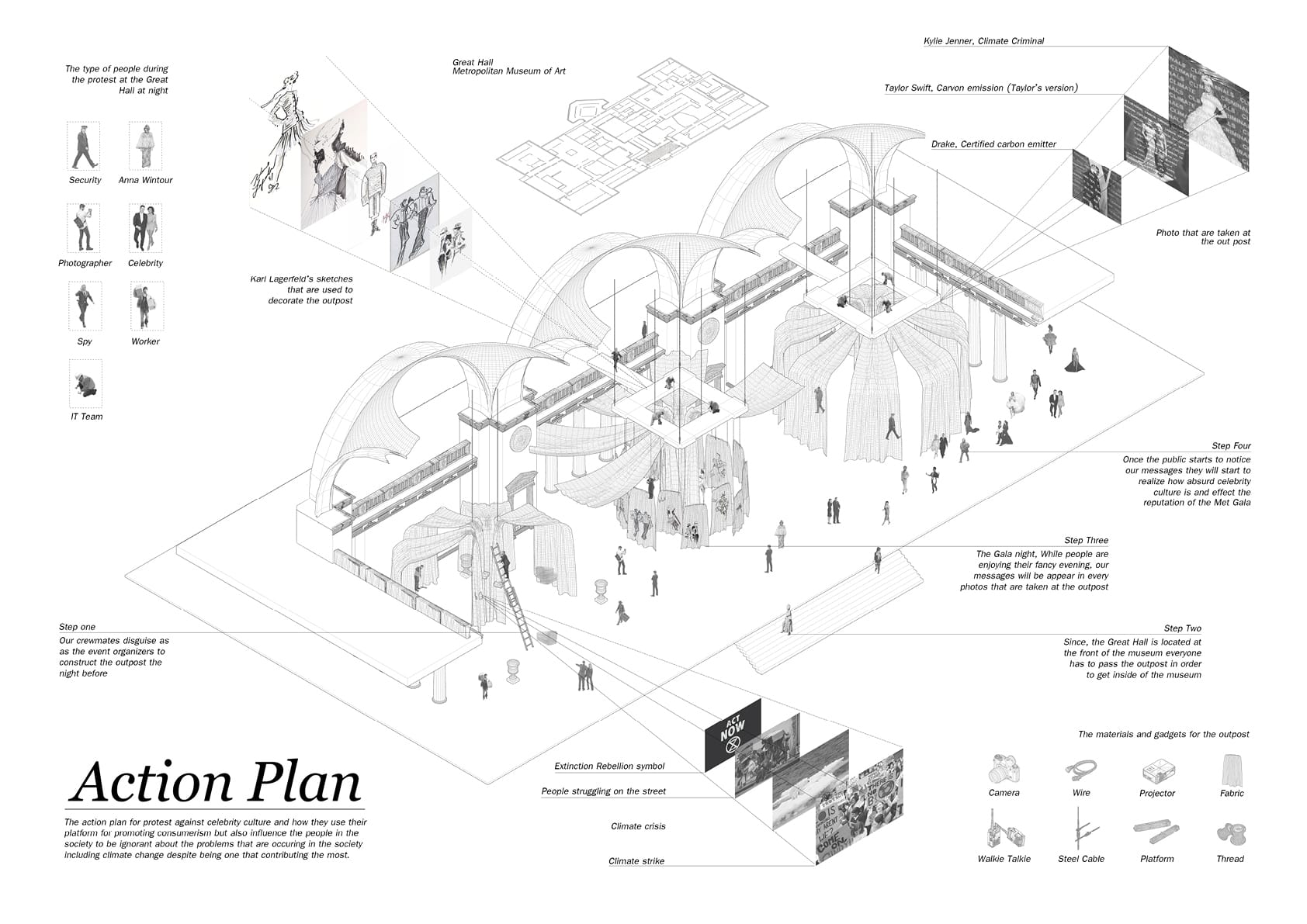
This post describes a second-year design studio brief I had written in 2022 for the International Program in Design and Architecture (INDA) at Chulalongkorn University in Bangkok.
Students:
Baipai Krittina Kanchanavera, Emma Amelie Napat Davis, Gung Natalie Dachavijit, Keyne Chayachat Teerasupapat, Krai Nagaya, Moji Machida Vongsrirungruang, Peachy Pete Mewongukote, Pite Pakrit Yodkam