Projects
Post-Carbon Futures
INTRODUCTION
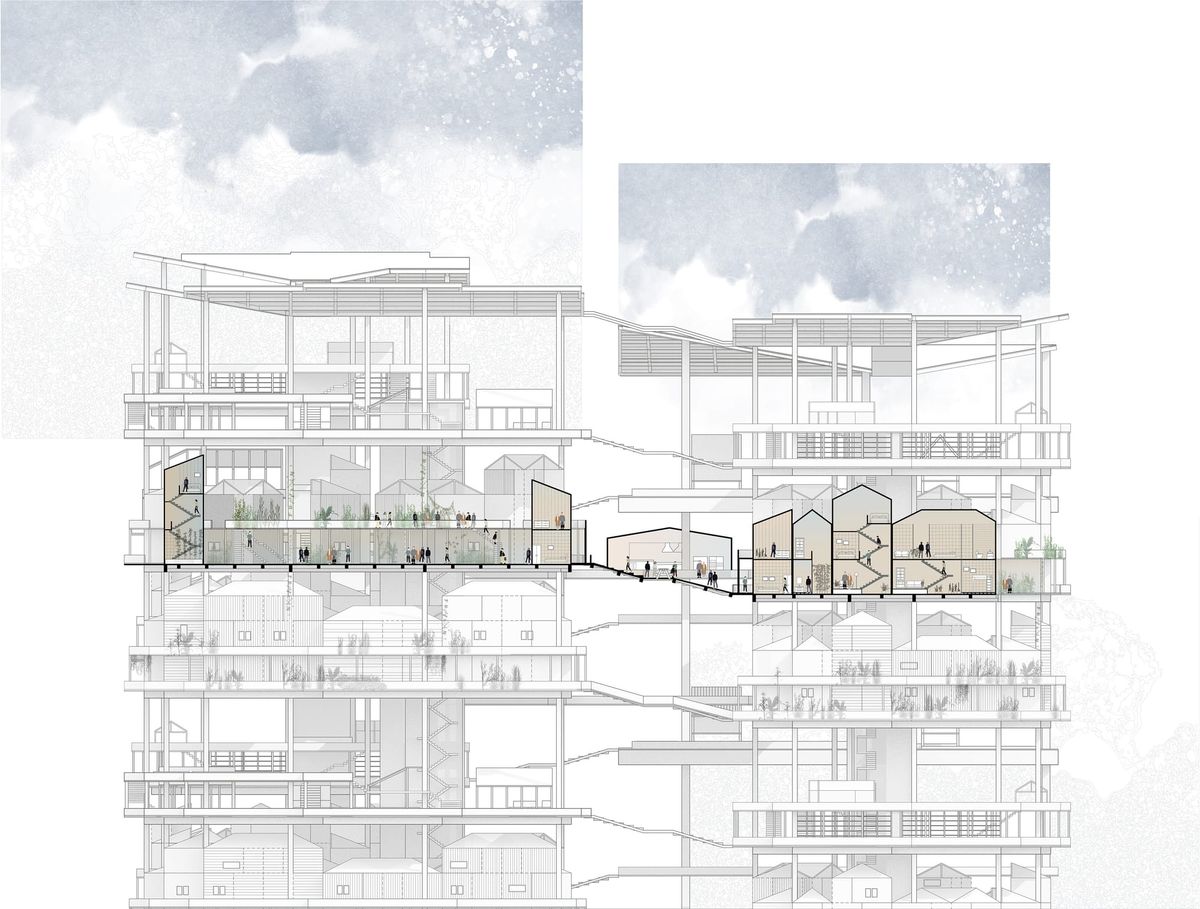
The effect of carbon-based fuels--namely, coal, oil, and natural gas (also known as ‘fossil fuels’)--on our built environment is undeniable. They have largely defined and profoundly impacted our modern way of life. New architectural typologies, infrastructural networks, and urban configurations emerged as an abundance of fossil fuels drove industrialized processes that eventually led to the creation of office towers, department stores, highways, airports, and suburbs. Elisa Iturbe, in her essay entitled “Architecture and the Death of Carbon Modernity,” refers to this interconnected network as “carbon form,” and she uses the example of a spinach leaf to clarify its omnipresence in our society:
“A spinach leaf in itself is not a carbon form. But a spinach leaf grown with petroleum-based pesticides and fertilizers, sown and harvested with gasoline- fueled machinery, packed in a plastic container, delivered on a truck, and sold in an air-conditioned Walmart superstore surrounded by open expanses of asphalt is...a complex network of carbon forms.”
The scope of carbon form is vast, and it is an environmentally destructive force that architects have repeatedly and complicitly promoted. Since the construction of the Crystal Palace in 1851 (and the rise of industrialization), there have been dozens of architectural styles--Art Nouveau, the International Style, Brutalism, Metabolism, Postmodernism, etc.--but Carbon Modernity encompasses them all and has persisted to this day. It is a way of life, an economic engine, and a social order. It is everywhere.
As seen in Richard Misrach and Kate Orff’s publication Petrochemical America (and many others), the impact of the fossil fuel industry has frequently led to catastrophic environmental consequences, but heavy industry is not the only sector that deserves blame. Architecture’s negative impact on the environment is also well-documented. According to the U.S. Green Building Council, thirty-nine percent of carbon dioxide emissions from fossil fuels are attributed to building construction, maintenance, and demolition. In order to create fundamental change in the way architecture is conceived and executed, we must interrogate the foundational carbon infrastructure that undergirds contemporary architectural production.
Three broad strategies that architects have adopted to combat the issue of carbon emissions are density, adaptive reuse, and energy efficiency. We will address all three in this studio.
The studio will attempt to mitigate the negative environmental consequences of building construction by reevaluating the role that carbon plays in contemporary architectural and urban systems. Students will imagine future scenarios that offer alternatives to the status quo, and they will propose high-density housing projects that speculate on new ways of living and interacting with a transformed carbon/energy infrastructure.
PHASE 1A: CARBON CALCULATION
“In this time of climate disruption, routine objects are transformed from useful tools into the detritus of our own decline.”
-Albert Pope, “Accelerated Obsolescence”
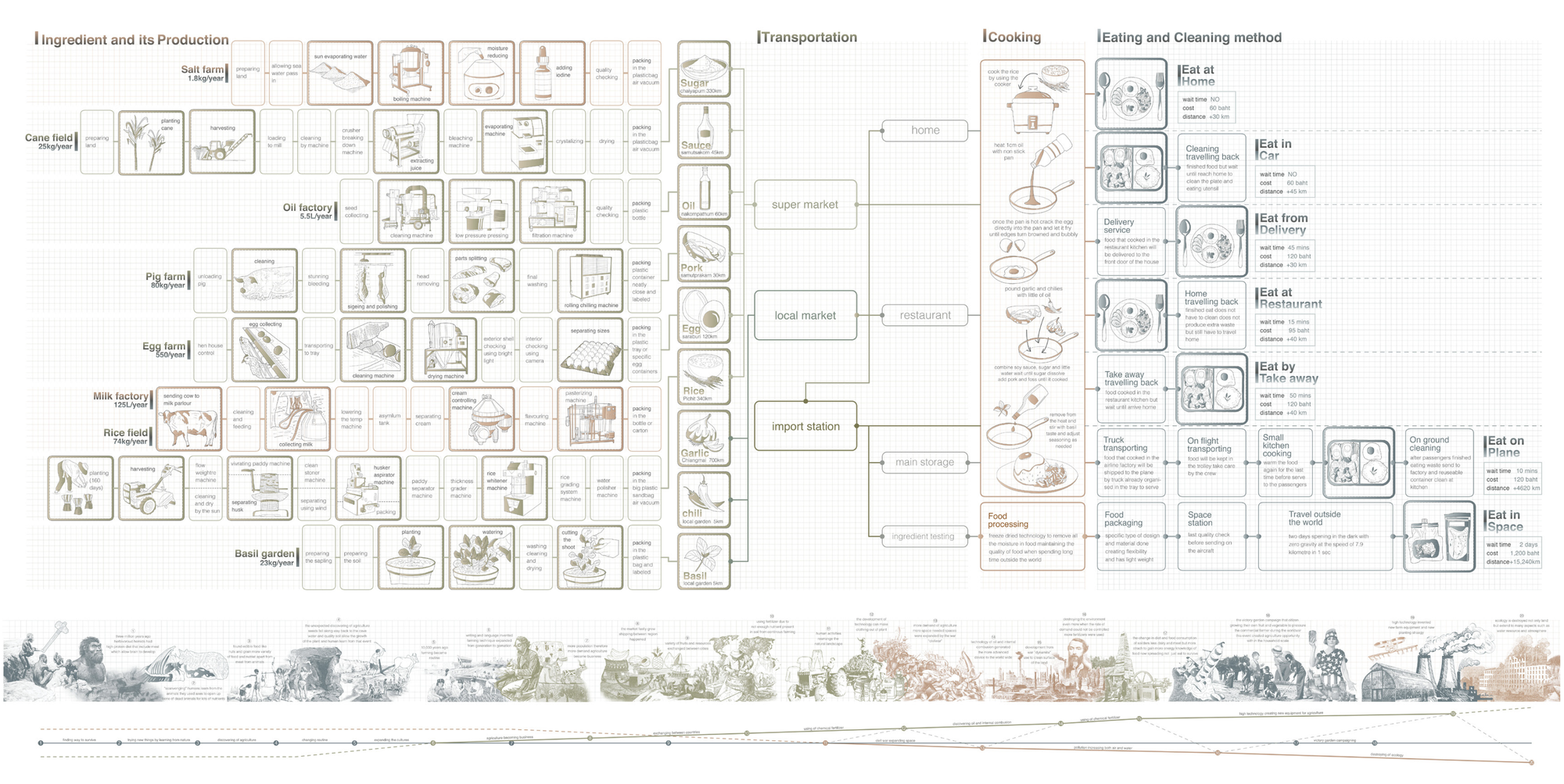
The first phase of the studio will be divided into two parts--an individual documentation assignment and a paired analysis assignment. First, students will explore their own personal carbon footprints from multiple vantage points and document them in an infographic format. They are encouraged to thoroughly examine their daily routines, energy and material consumption habits (clothing, food, etc.), extracurricular hobbies, and travel tendencies. This information will facilitate the analysis in phase 1B and may also serve as a catalyst for the imagined scenario in phase 2.
PHASE 1B: DEFINING DECARBONIZATION
“[During this century] the economic investment in future building and infrastructure is expected to reach 90 trillion dollars. That’s more than the value of the earth’s existing built environment.”
-Carbon: A Field Guide for Designers and Builders
What is “decarbonization?” In order to decarbonize, we must first understand the extent of carbon’s presence in our world. Phase 1B seeks to reveal the ubiquity of carbon in our everyday lives; to highlight the multiple scales in which carbon has permeated our modern lifestyles and virtually everything we do.
Transitioning from a personalized analysis to a wider societal scope, students will identify one or more specific topics related to their own carbon footprints and analyze the presence and the effects of carbon related to those topics at multiple scales:
1. The Household (small)
At this scale, students will examine a variety of household objects and/or behavioral routines. This may overlap with the data collected in phase 1A.
2. The Building (medium)
The analysis at the building scale may include production facilities, warehouse or distribution centers, or specific architectural components.
3. The City (large)
At the city scale, students will focus on infrastructural networks, municipal services, and utilities in and around Bangkok.
4. The Region (extra large)
At this scale, analysis may include transnational shipping routes, oil pipelines, environmental degradation, political alliances, and trade agreements in the ASEAN region and beyond.
Through their research, students’ should find answers to the following questions:
- Where can we see evidence of the impact of fossil fuels? For example, what are the materials used in the objects’ manufacture and what kind of processes are required to make them?
- Where do individual parts come from and where are they combined or assembled?
- What is the object or product’s life cycle?
- What kind of energy production or distribution infrastructure is required at each scale?
- What are the consequences of our behaviors and how can they be changed?
Each student is required to map, diagram, and illustrate his/her chosen topic(s) to construct a coherent carbon assemblage that clearly reveals the multi-scalar carbon system in Bangkok and the larger ASEAN region. These drawings should juxtapose a variety of scales and timeframes--the personal and the planetary, the contemporary and the geological. This phase seeks to connect our personal behaviors to their wider cultural and environmental consequences. By exploring the ramifications of a single activity or product, students will obtain a greater understanding of the scope of the carbon problem and discover a wide range of potential solutions.
PHASE 2: NEAR-FUTURE SCENARIO
“Every click and hum of the air conditioner kicking in is a slow, extended, collective symphonic lament accompanying the decline of civilization. Comfort is destroying the future, one click and hum at a time.”
-Daniel A. Barber, “After Comfort”
In the second phase, students will evaluate the complex, interconnected systems from their phase 1 analysis and propose a near-future scenario in which our dependence on fossil fuels is critically evaluated. This phase requires students to understand the ways we use carbon at different scales and the often tangled connections between them. They will not only speculate on an alternative future, but they will address the ripple effects that even minor changes to the current global energy infrastructure can create. The development of the scenario should clearly relate to the documentation in phase 1 and the research in phase 2. Such scenarios may include a future in which air conditioning is banned worldwide and we are forced to reckon with our own standards of personal comfort, a future in which all cars are taken off the road and we reoccupy the streets for alternative uses, or a future where governments outlaw beef production and regulate our diets.
PHASE 3: HIGH-DENSITY HOUSING
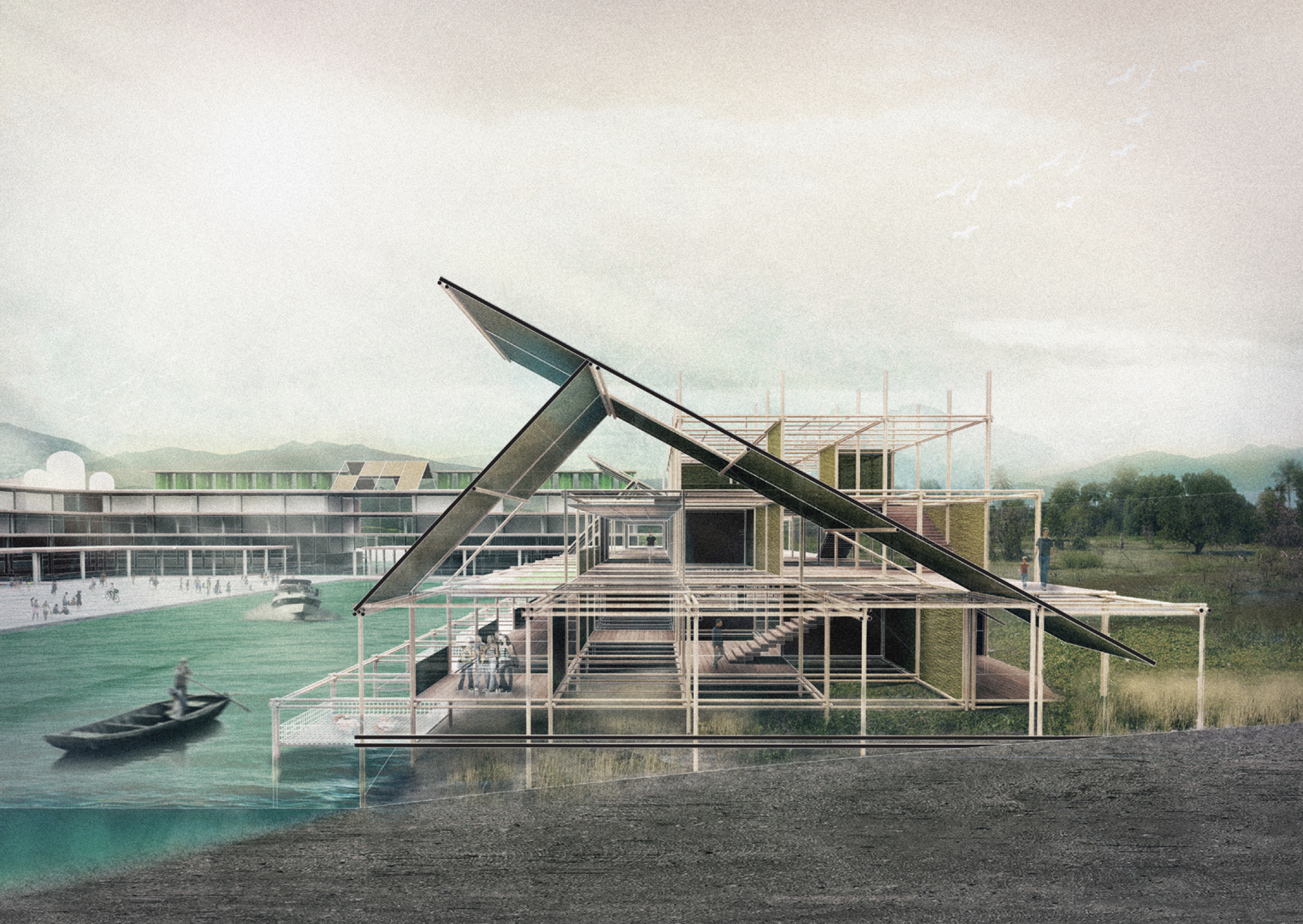
In phase 3, students will explore the consequences of their near-future scenarios to develop a high-density housing proposal. As the most fundamental, necessary, and widespread building type, housing has the most extensive carbon footprint. Lower density housing in suburban areas generates a much greater environmental impact than high-density housing due to the necessity for additional roads, utilities, and supporting infrastructure. Each project will contain residences for a minimum of 200 people, and students will critically address the following topics:
DENSITY
Increasing density is a proven strategy for architects to reduce our impact on the environment. At both architectural and urban scales, consolidating our physical footprint can similarly limit our carbon footprint. Tim De Chant, author of the blog Per Square Mile speculates that if everyone in the world lived in a city as dense as Manhattan, the global population could fit into the state of Texas. Indeed, increased density can be profoundly effective.
ADAPTIVE REUSE
New construction is fundamentally more resource-intensive than renovation or adaptive reuse. Students are encouraged to select a centrally-located site and an existing building that offers convenient connections to urban infrastructure and access to a variety of amenities. The chosen buildings do not need to be abandoned, and new functions may be proposed as part of each student’s speculative scenario.
ENERGY EFFICIENCY
Architecture today largely focuses on operational energy efficiency, including low-energy light fixtures, photovoltaic cells, and efficient appliances, but embodied energy, which can be defined as the sum of all energy required to extract, process, transport, construct, maintain, demolish, and recycle the elements of a building, are equally (if not more) important to consider.
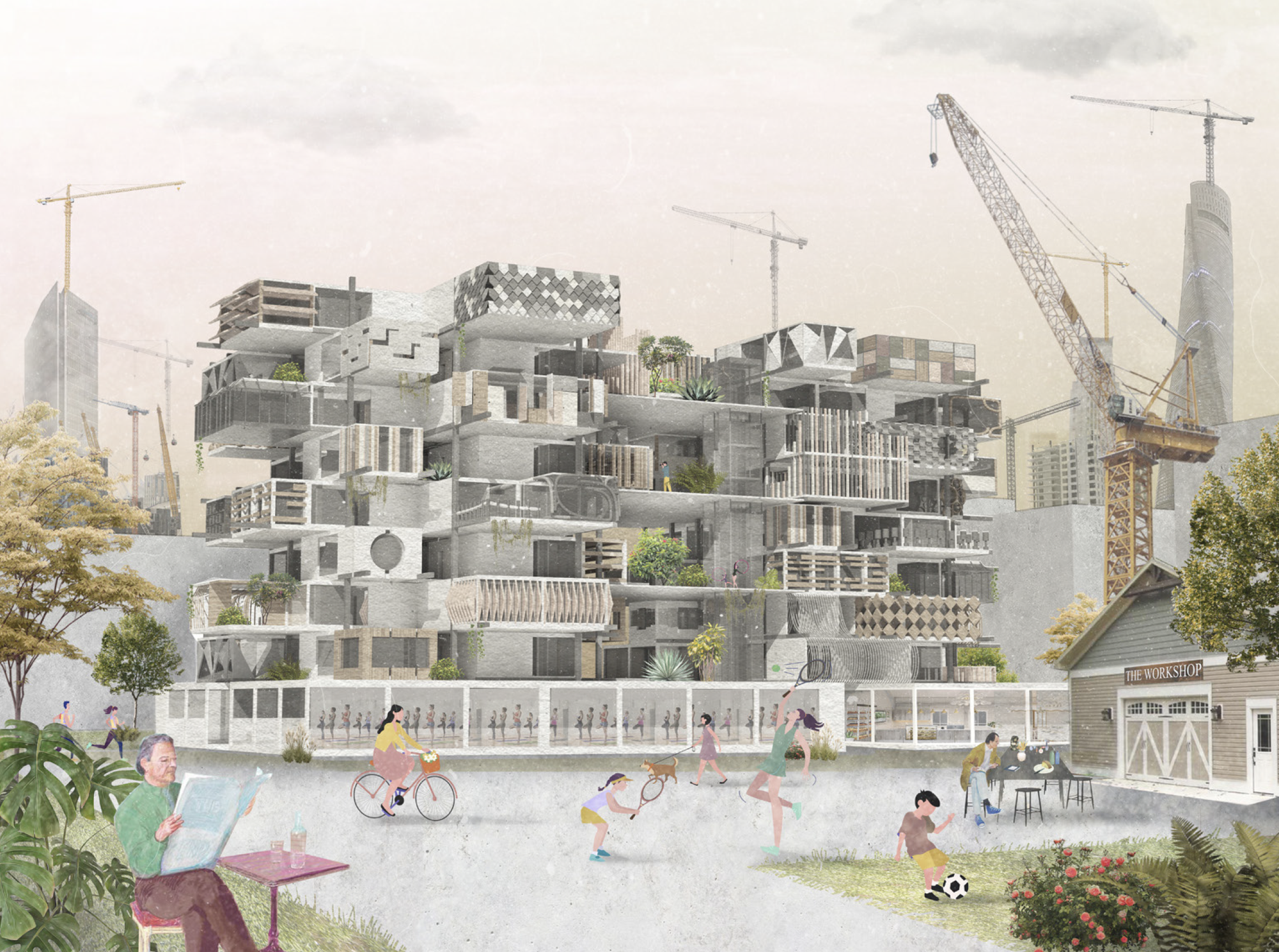
This post describes a fourth-year design studio brief I had written in 2020 for the International Program in Design and Architecture (INDA) at Chulalongkorn University in Bangkok.
Students:
Earn Lalipat Sirirat, First Sakdipat Yachaima, Jam Praewa Keereewan, Megan Westrop, Nai Palida Emwattana, P Patr Vacharanukulkiet, Poompoom Kanchaporn Kieatkhajornrit, Thunda Rerkpaisan