Projects
Back to the Drawing Board
INTRODUCTION
One hundred years ago, as we emerged from World War I and as Modernist architecture truly came to prominence, the hugely influential Bauhaus in Weimar, Germany fundamentally changed the trajectory of architectural education and the discipline at large by emphasizing the importance of form and function in design. This approach prioritized usefulness over aesthetics and placed an emphasis on the use of new technologies and materials. Today, we find ourselves at a similar juncture in the field of architecture, with increasingly pressing global issues–the decarbonization of our global systems of production, the decolonization of our educational institutions, continually expanding economic inequality, the growing capabilities of artificial intelligence–that require us to continue pushing disciplinary boundaries and challenging the status quo.
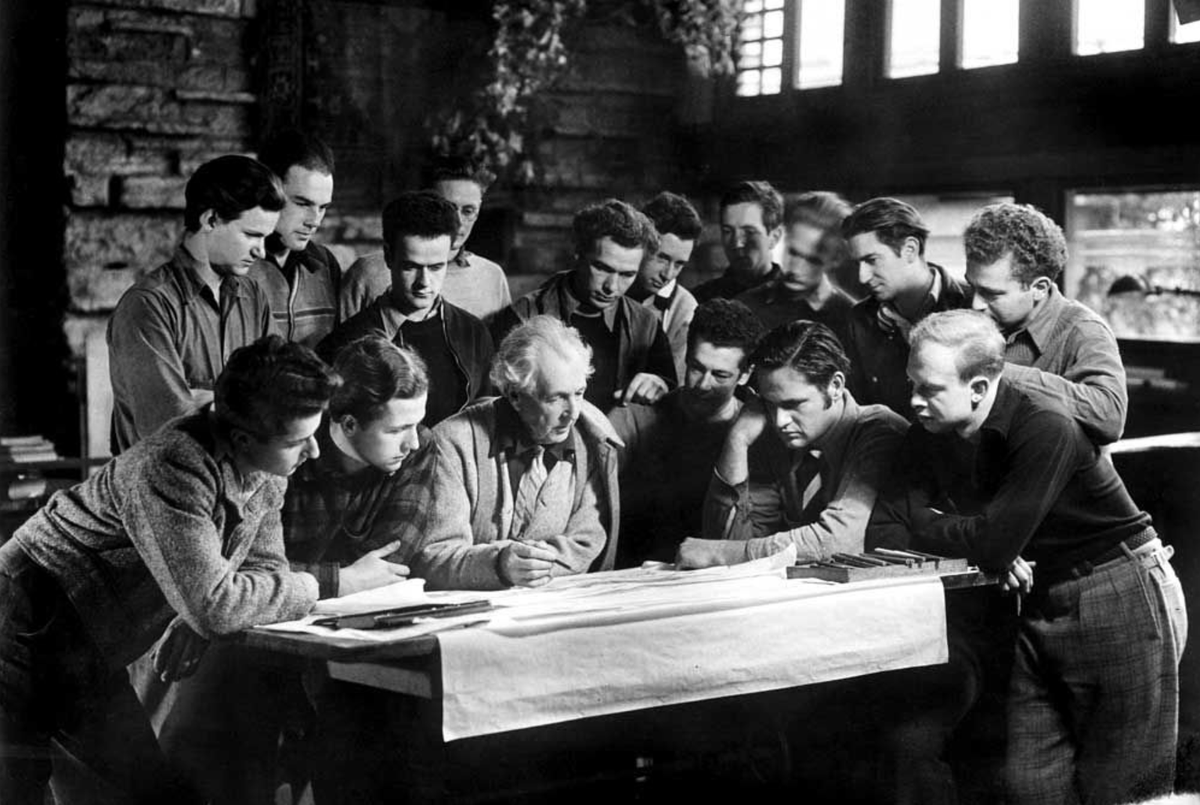
Having attended INDA for over a year now, you have become familiar with some of the typical conventions of architecture school–the “desk crit” (tutorials), the “pinup,” the “master” instructor– many of which have existed for over a century. With the torrent of social, cultural, and technological changes we are currently facing, it is increasingly urgent that we question, confront, and occasionally reject the traditional methods of architectural education. One of the goals of the studio is to discover and experiment with unconventional teaching and learning practices. This may include silent pinups, fast-paced design “charrettes,” micro-lectures, panel discussions, “open” tutorials, student-led project reviews, and many more. The other goal of the studio is for you to reflect on your personal experiences in architecture school, to embrace your agency, and to take a more active role in shaping your own education moving forward.
PHASE 1 - Pedagogies Past + Present
“Architecture pedagogy has become stale. Schools are spinning their wheels as if something is happening, but very little is actually going on.”
- Beatriz Colomina, “Radical Pedagogies” lecture at the Strelka Institute (2019)
In the first phase of the studio, you will familiarize yourself with the discourse around architectural education. Through a series of readings on the subject, you will begin to contextualize your own educational experience. What are the typical architectural “pedagogies” in schools around the world? Why have so many schools seemed to settle on pinups and “desk crits?” Does it have to be this way? You will be participating in discussions both within and outside of your studio group centered on the following questions:
- How have we historically learned about architecture?
- How should we learn about architecture?
- What are the most important issues that architecture schools should be addressing?
- What are some examples of teaching methods that you may not have experienced before here at INDA?
- How are architecture schools limited by the institutions with which they are associated?
- What social, environmental, or technological trends have influenced the development of architecture schools specifically or other schools more broadly?
Through these group discussions, you will be asked to formulate your own “mission statement.” What should an architecture school be doing today? What themes should it focus on? How should students be taught? How does this compare to the way schools are currently teaching architecture? How do you see architecture schools developing in the future? This mission statement is meant to be a continually evolving document (through phases 2 and 3), and it will not be graded until the midterm.
Phase 1 will culminate in a year-wide panel discussion with instructors reflecting on their time in architecture school and students offering their thoughts relative to their own experiences.
PHASE 2 - Processing Precedents
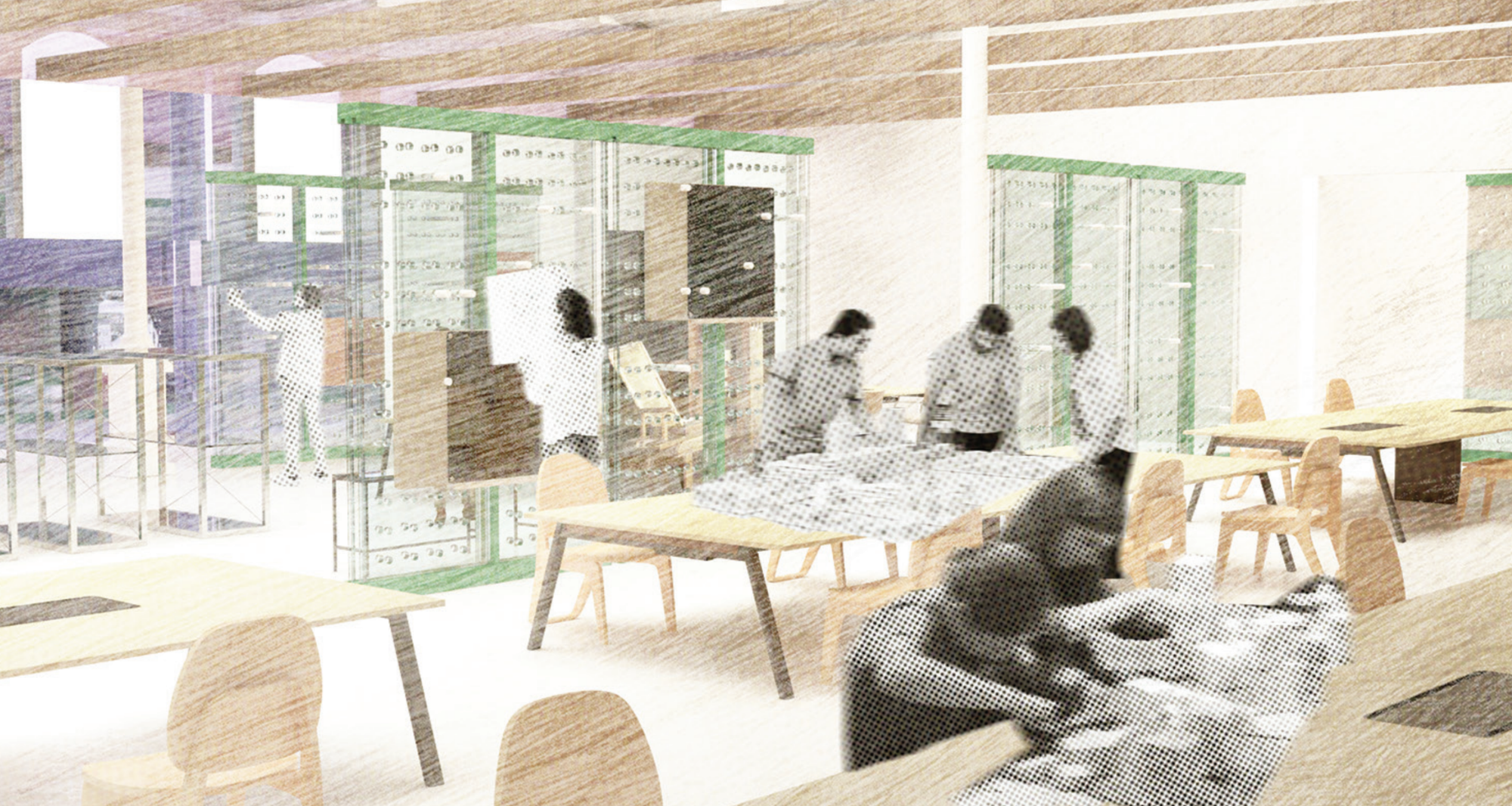
After obtaining a greater understanding of how architects are taught to design, the second phase will continue to explore how architects actually design through a rigorous analysis of a selected case study building. In the beginning of the phase, we will conduct a group lecture in which multiple instructors discuss the different design approaches of some of their favorite buildings. This is meant to help each of you to choose a single building from a pre-selected list of case studies prepared by the studio instructors. To embrace a more diverse range of educational approaches, the list of precedents is not limited to schools of architecture or to colleges/universities of higher learning. You should be addressing the following characteristics of the building through your analysis:
- Form - What geometries are used and how do they relate with the functions of the spaces? What is the “formal language?”
- Massing / spatial organization - How are spaces arranged–linear, radial, clustered, stacked, etc.? What is the structural system?
- Program distribution / arrangement - What is the spatial hierarchy? Which spaces are the largest or most important?
- Facade - How does the building relate to the exterior? To light and air?
- Material - What materials are used for the interior and exterior and why?
- Circulation - How do people move from one space to another? Are occupants meant to pass through spaces in a specific sequence?
You should also familiarize yourself with the architect’s design process. What is the primary driver of the design–form, material, function? What types of spaces can be found in educational buildings (classrooms, libraries, workspaces, labs, meeting spaces, etc.)? What makes your case study distinct or significant? What specific features of the building are considered innovative when compared to other projects? What steps did the architect take in designing this building? This phase will conclude with a collective exhibition in which students can see the work of their peers as well as the variety of approaches to the design of school buildings.
PHASE 3 - Site and Space
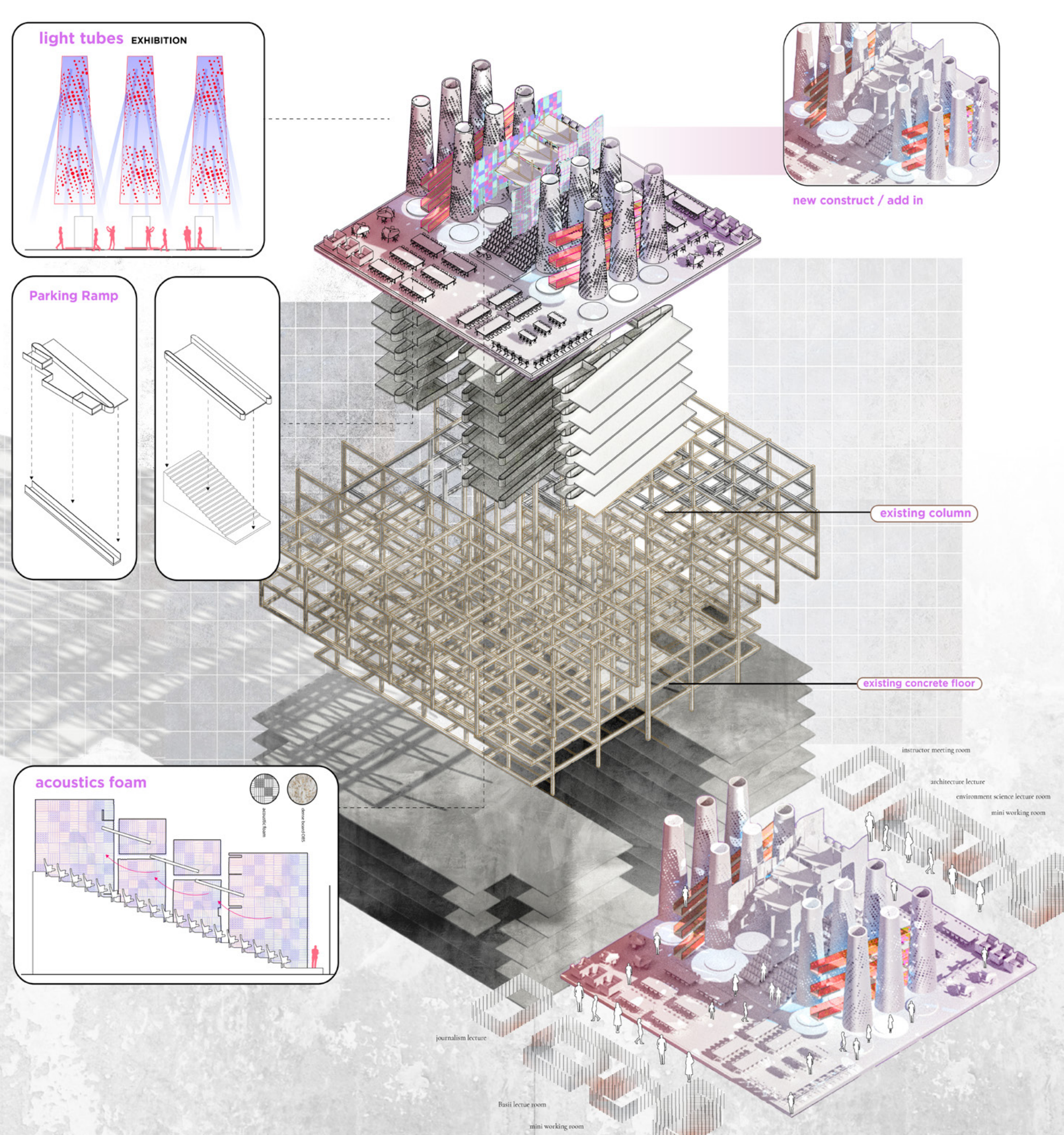
Following the case study analysis, you will now have a clearer vision of the specific functional or programmatic requirements of an architecture school (phase 1) as well as the types of spaces you would typically find there (phase 2). In phase 3, you will create an initial design proposal. After a micro-lecture outlining how to choose an appropriate site for your project and how to effectively document that site, all of you will choose a district within Bangkok and eventually a single site within that district. Site areas should not exceed 3,000 sq. meters. You are encouraged to consider a wide range of potential sites for learning (you may propose a site that is not affiliated with a particular institution like Chulalongkorn University, for example). The site may be located anywhere in Thailand, but it should be close enough for you to visit and obtain first-hand documentation. Your site does not need to be an empty parcel of land–you may implement an adaptive reuse strategy in which you choose an existing building to modify in the creation of your school.
Part of this phase will also include a “design blitz” (a variation of the well-established “charrette”). During the blitz, each of you will be required to design a single space within the school. The intention of the blitz is to design and draw very quickly without overthinking what you are doing. This period of intense production accomplishes two goals–it gets your initial thoughts on paper (and out of your head), and it allows you (and your instructor) to examine some of your preconceived notions or assumptions about architectural design. The specific output will vary from person to person. Which space do you consider to be the most important in your school (a classroom, a meeting room, an event space, etc.)? What is the best type of drawing to communicate your ideas in the clearest way possible? You will only have two hours to create your initial proposals, and this will be followed by a group discussion with your instructor.
PHASE 4 - Education Reimagined
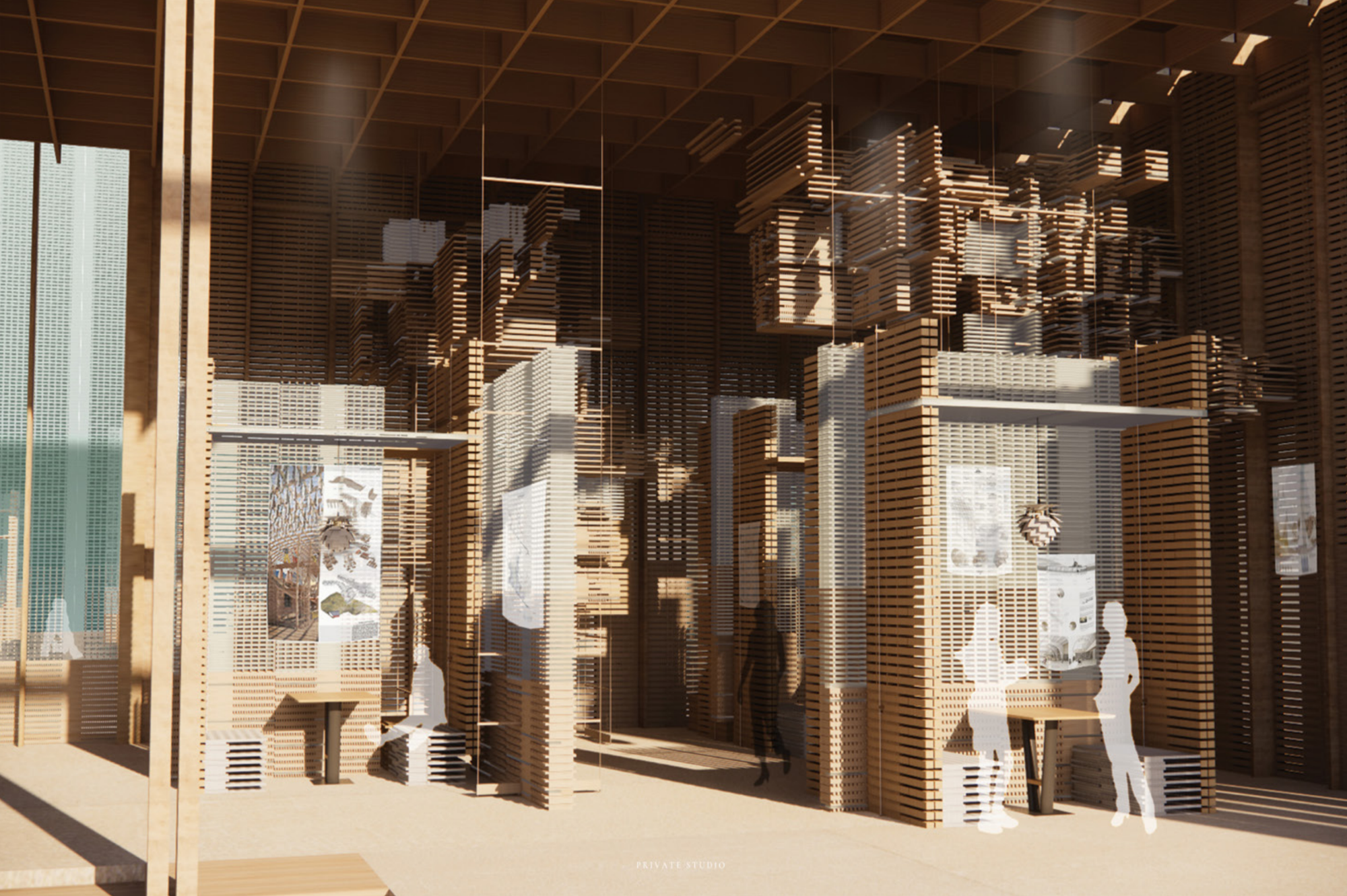
In the fourth phase, you will complete the design of an architecture school for a minimum of 100 university students. The primary objective of this phase is to balance the diverse considerations that influence your project–specifically, the site, the program, and the mission statement. In the beginning of the phase, you will propose a minimum of two massing options for the multiple spaces that comprise your school. We will also have an “open tutorial” session in which you can choose an instructor with whom you would like to discuss your project (this session will not be graded). Finally, we will experiment with different pinup formats–for example, a student-led review in which each of you will be given a specific role within your group, and you will provide feedback for your peers based on a single criteria as determined by your instructor (e.g. technical resolution, overall concept, verbal presentation, plan drawing, relation to context, graphic quality, etc.); or a hybrid paired review and exhibition in which you meet with your studio instructor and your chosen open tutorial instructor. Split-tutorials will also allow instructors a longer time to review your work in great detail prior to the final review.
This post describes a second-year design studio brief I had written in 2023 for the International Program in Design and Architecture (INDA) at Chulalongkorn University in Bangkok.
Students:
Cherry Napas Rungruangsiripan, James Possatorn Rattanasappakuna, Jenjen Sirapatsorn Saetang, Meen Yosita Parnkum, Mint Methaporn Chaweewongpaisal, Ploy Panpailin Kongvinyu, Prae Patrarak Putipanpong, Tim Pranpridi Jarupran