Projects
Architecture's Afterlife
INTRODUCTION
“More than 50% of the natural resources used worldwide are consumed by the building industry alone.”
-Werner Sobek in ‘Architecture Isn’t Here to Stay: Toward a Reversibility of Construction’ (2010)
The environmental damage caused by human activity on our planet is indisputable. The global capitalist economy and its irrational pursuit of infinite growth has had a devastating effect on the natural world. As the global population continues to increase and as our collective material consumption rises, the consequences of our wasteful culture only worsen. This is exacerbated by the prevalence of ‘single-use’ products across a broad range of industries. This consumption is, of course, not limited to the products we buy but extends to the buildings we occupy for every conceivable human activity.
According to the U.S. Green Building Council, thirty-nine percent of carbon dioxide emissions from fossil fuels are attributed to buildings that have shorter lifespans than ever before. Most of these emissions come from heating, cooling, and lighting, as well as powering appliances and electrical equipment. For many years, we have attempted to address increasing emissions through ‘sustainability’ and ‘green design’--terms that originally referred to environmentally responsible architecture but have since become corrupted by corporate marketing agencies. To achieve legitimately sustainable architecture, we must consider all aspects of a building’s design and performance.
Architecture today focuses almost exclusively on operational energy, including HVAC systems, light fixtures, photovoltaic cells, and efficient appliances. Consequently, “net-zero energy” buildings have become increasingly fashionable, but this name is misleading as it understates the significance of embodied energy (and embodied carbon), which can be defined as the sum of all energy required to extract, process, transport, construct, maintain, demolish, and recycle the elements of a building. In order to create fundamental change in the way architecture is conceived and executed, we must collectively shift our focus and investigate the material, technical, and social design opportunities inherent to the systems that undergird contemporary architectural production.
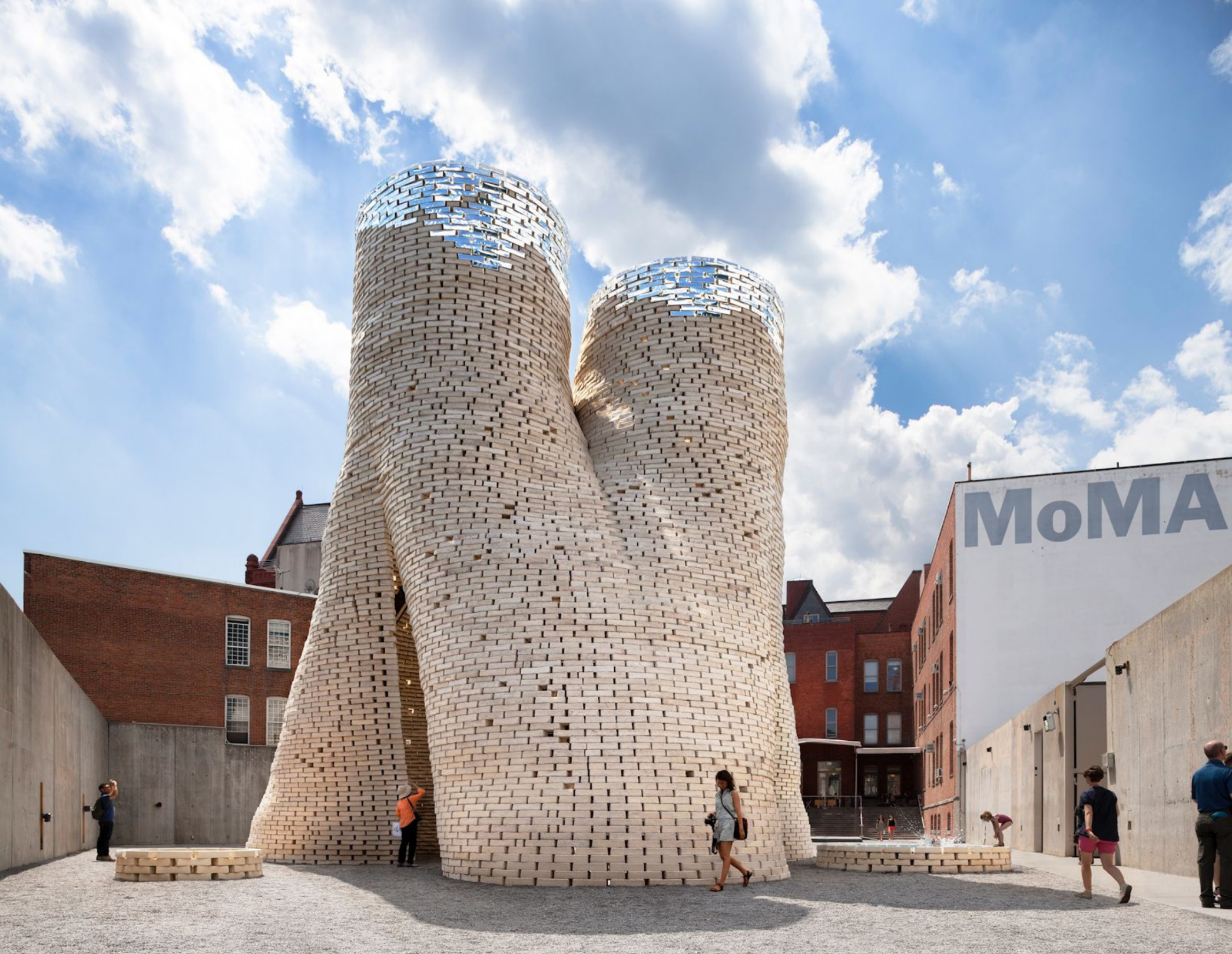
In 2002, Michael Braungart and William McDonough popularized the idea of ‘Cradle to Cradle’ design as a way to address the excessive production of waste in our consumer culture. Since then, recycling building materials and reusing waste have become more common, but we have yet to see truly significant change in the building industry. Today, despite growing demand for a ‘circular economy,’ building elements are rarely repurposed after their first use. While many of these components are technically reusable, they are generally down-cycled or landfilled. At a large scale, this creates a catastrophic environmental impact, and a significant loss of economic value.
Reused building materials have historically been viewed as regressive or ‘backward.’ This is partly because of the way buildings are portrayed in books, in magazines, and online. We only see photos of buildings immediately after construction has finished, when the glass is clean, the stone is polished, and the paint is fresh. Furthermore, in our current ‘throwaway culture,’ new products (and buildings) are promoted as more efficient, cleaner, safer, and more aesthetically appealing.
This studio will re-establish the value of reused building materials by exploring the ideas of ephemerality, transience, and impermanence in architecture. Students will trace materials from their points of origin to their points of deployment in buildings, but they will also examine the life of materials in occupied buildings and speculate on their afterlives. The topics of the studio will include obsolescence, material properties, construction methods, disassembly, and reuse.
PHASE 1: MATERIAL FLOWS
“Eventually, the future city makes no distinction between waste and supply.”
-Mitchell Joachim describing his Rapid Re(f)use project
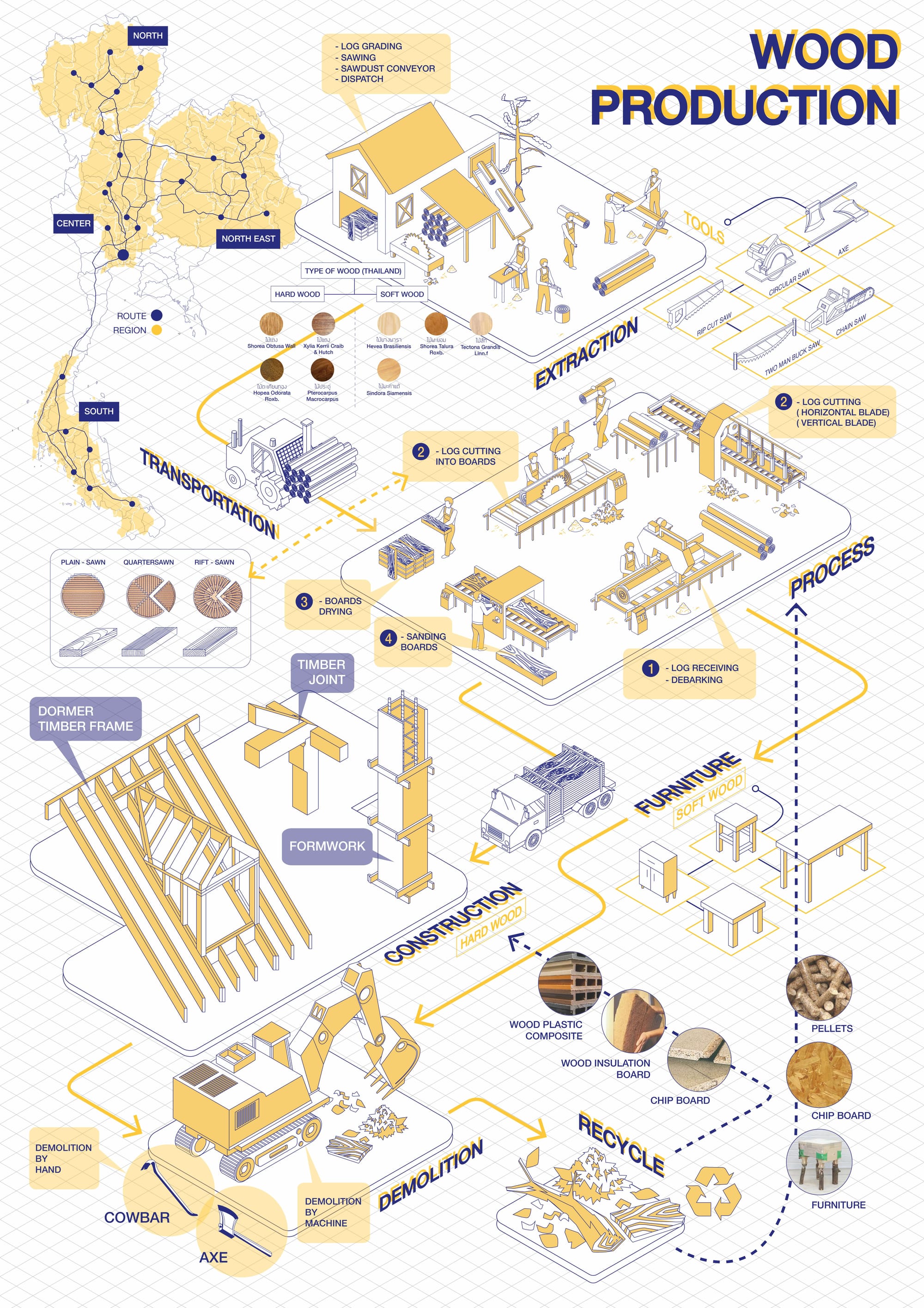
Phase 1 is an introduction to the concept of embodied energy in architecture. In the initial phase of the studio, students will choose a single building material from the list below (or another that must be approved) and conduct a comprehensive documentation and analysis of its properties, applications, and energy/carbon footprint. In order to facilitate high-quality research, the materials should be readily available in Thailand. These materials may include but are not limited to steel, concrete, glass, wood, bamboo, brick, plastic, aluminum, copper, cork, stone, ceramic, or textiles.
The goal for this phase is to focus on standard practices that are currently used in the building industry. Ceramics are typically used for tile installations; aluminum is normally used for glazing systems and cladding panels; steel and concrete are most commonly used for structural elements. Unconventional variations or combinations of these materials will be explored further in phase 2. After selecting a material, each student will study its flow through the following steps:
1. Extraction
We all know that materials come from somewhere, but we are largely unaware of the exact locations or the staggering scale at which extraction processes occur today. Mines and quarries are using increasingly sophisticated techniques to remove unprecedented amounts of material from the earth for the purposes of industrial processing. Students will document the locations where materials are harvested from the earth as well as the equipment, and techniques that facilitate this extraction.
2. Processing
Processing can take many forms--cutting a stone into standardized shapes and sizes, liquifying iron to form steel beams, or mixing concrete aggregates. The processing of raw materials typically generates the greatest amount of waste. Students will identify the steps required to process their chosen materials and classify the kinds of waste generated through these operations.
3. Transportation
In the past, due to technological limitations, societies only used materials that were readily available to construct their buildings. Today, as globalization and transportation infrastructure have expanded dramatically, a single building may contain components from dozens of countries around the world. Students will explore how transportation networks have evolved to accommodate new scales of consumption.
4. Construction
The construction site is where material assemblies, technological systems, and labor forces are carefully choreographed to produce a physical building. Students will question the construction process and scrutinize particular details that reveal underlying intentions about a building’s permanence, flexibility, and durability.
5. Maintenance
After construction, the architect typically disappears. The building is photographed in its perfect, idealized state, the client moves in, and the job is complete. No matter the use, the size, or the materials, however, maintenance is an inescapable reality of architecture. Students will examine how material selection, new technologies, and construction details are designed for maintenance.
6. Demolition
Buildings are demolished when they can no longer perform their original function, when a new owner purchases the property, or when their maintenance becomes too cumbersome. To combat the inherent wastefulness of demolition, some architects have begun to design buildings with a greater degree of programmatic flexibility, while others have chosen adaptive reuse as a way to accommodate change over time. Students will research alternatives to demolition as well as ways to reuse demolished materials for new construction.
7. Recycling
“Reduce, reuse, recycle” is a phrase that environmentalists have promoted for decades. While recycling certainly helps to minimize waste, it only delays the end of a material’s life. Designers are increasingly embracing the idea of the circular economy, in which waste products can be reused for new or alternative applications without energy-intensive processing.
Through their research, students’ should find answers to the following questions:
- Where does the material originate? Does it occur naturally? What are the raw materials from which it is made?
- What are the different forms or applications of the material in building construction? This may include structure, facade, interior finishes, or HVAC services
- Are there other secondary or supplemental materials that enhance its performance, durability, aesthetics, etc. (silicone in glass facades, for example)?
- What are the steps involved in transforming the material from its raw state into a finished product?
- Does this transformation generate organic (or inorganic) by-products?
- How does it need to be maintained? Can it be repaired or does it need to be replaced?
- When and how does it change over time?
- Can it be recycled (and if so, how)? If not, how long does it take to decompose?
- Are there any government regulations that affect the production, maintenance, or reuse of the material?
During their research, students will be required to visit one or more sites of production in or around Bangkok--a stone quarry, a cement mill, a steel yard, or an active construction/demolition site--to follow the material from the source of its extraction to the site of its “final” application (group trips will be scheduled during the semester, see page 8). Beyond the manipulation of materials, these sites also affect the environment in larger ways such as soil erosion, public health, and wildlife habitat loss, and these consequences should also be documented. Students will also be required to interview multiple stakeholders to gain a greater understanding of the overall process (factory workers/managers, material resellers, construction managers, demolition contractors, etc.). Architecture is not just the creation of a building--it is a complex, temporal network ranging from the scale of regional or international transportation infrastructure down to the scale of molecular composition.
Using this information, each student will map, diagram, and illustrate the complex, multi-scalar system for his/her material into a material record (see below). Most of the system will be contained within Thailand, but a substantial number of materials and/or building products may be imported from other countries, and these should be included in the record as well. The material records from each student will be combined into a collective research document that can be referenced by all students in future phases.
PHASE 2: NON-STANDARD PRACTICES
“Architecture is the opposite of an image. Architecture is not about space, but about time.”
-Vito Acconci at Vienna Design Week (2012)
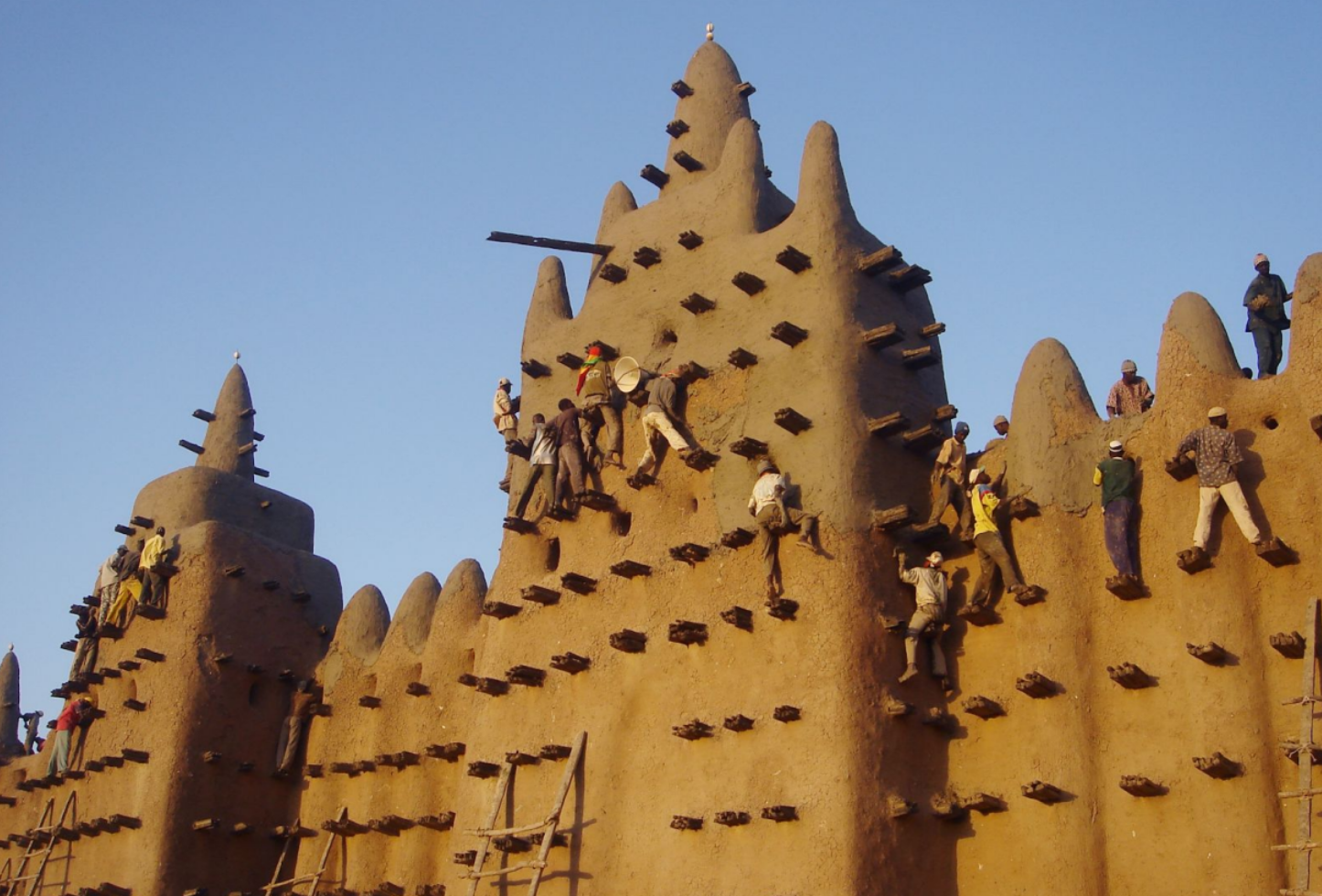
In the second phase, students will evaluate the systemic issues from their phase 1 material research and propose a variety of non-standard practices focusing on the ideas of ephemerality (very short duration), transience (short duration), and impermanence (longer-term duration). Students are encouraged to identify case study projects throughout history across geographic and climatic regions that address these topics. They will then use these case studies to address issues of time in their own material systems with a particular emphasis on selected stages--namely, processing, construction, maintenance, demolition, and recycling. ‘Processing’ can involve different formal geometries, manufacturing techniques, or material combinations; ‘construction’ may address issues of technology, labor, and/or assembly processes; ‘maintenance’ may refer to building repair or material decay; demolition can encompass the destruction or disassembly of buildings (either mechanically or biologically); and ‘recycling’ can include reuse of building components or other post-occupancy considerations. The ideas of ephemerality and materiality should be examined with the aim of reducing embodied energy and/or carbon consumption. Depending on the students’ chosen material and subject of exploration, they will propose material experiments, performance tests, partial construction assemblies, or building component prototypes (floors, walls, facades, etc.) that introduce different processing techniques, offer new formal possibilities, generate atypical material mixtures, or suggest unexpected functions. Students should not limit their investigations to new ‘cutting edge’ techniques and are encouraged to also revisit more traditional vernacular methods.
PHASE 3: ARCHITECTURE AND IMPERMANENCE
“Nothing is lost. Nothing is created. Everything is transformed.”
-Antoine Lavoisier’s Law of the Conservation of Mass (1780s)
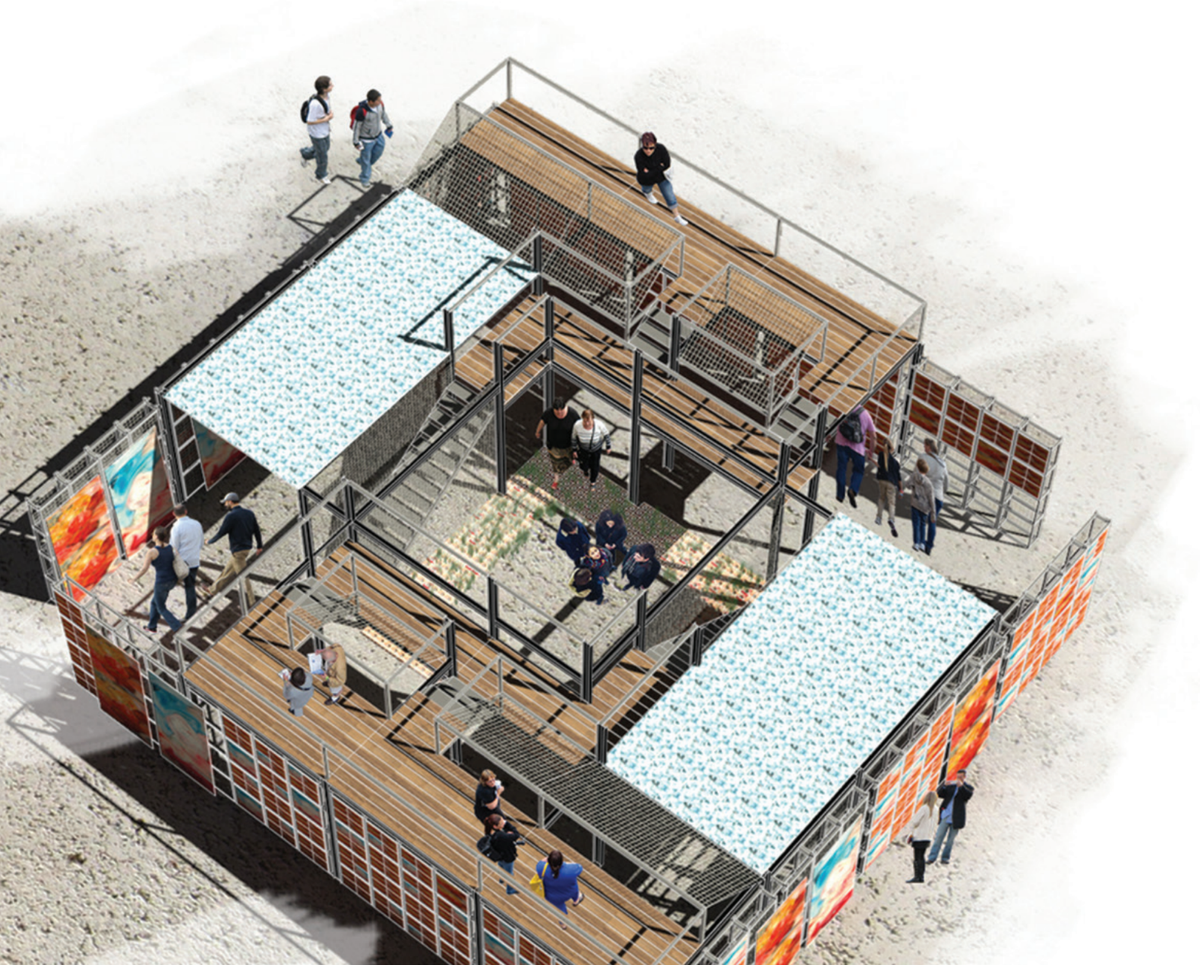
Students will continue the development of their material experiments and component prototypes into phase 3 while progressing to larger scale issues. In this phase, students will need to consider additional building elements, their life cycles, and their spatial, functional, and tectonic relationships in the design of a small-scale pavilion (300-400 sq. meters) for events and/or exhibitions. They will also select a site based on the availability of the proposed material(s), proximity to processing sites, or access to critical transportation infrastructure. This phase will emphasize the key principles of flexible and temporary building design including space planning, connection details, modular compositions, separable components, and mechanical, electrical, and plumbing (MEP) system integration. Students will distinguish between monolithic and tectonic construction systems in order to understand how they encourage (or discourage) disassembly, and they will focus on reducing environmental impact relative to standard construction methods.
PHASE 4: THE AFTERLIFE
“If a building can only be assembled as itself, there is an inherent loss of potential.”
-Anders Lendager describing his Circle House proposals (2018)
Expanding on the ideas of disassembly and impermanence, phase 4 will require students to speculate on the afterlife of their pavilions. What is the lifespan of the building? What happens when it is no longer considered usable? In this phase, students may propose a transformation or reconfiguration of their original structure; they may suggest reusing individual components for architectural (or non-architectural) applications; or they may envision a building that completely disappears through biodegradation and is rebuilt from scratch. In order to accomplish this, students will continue to refine their pavilions from phase 3, ensuring that parts of the building can be reused over time or even through multiple life cycles. They must address issues of material sourcing and composition, manual or industrial processing, maintenance, and structural integrity. The projects will be presented as simulations rather than traditional static representations.
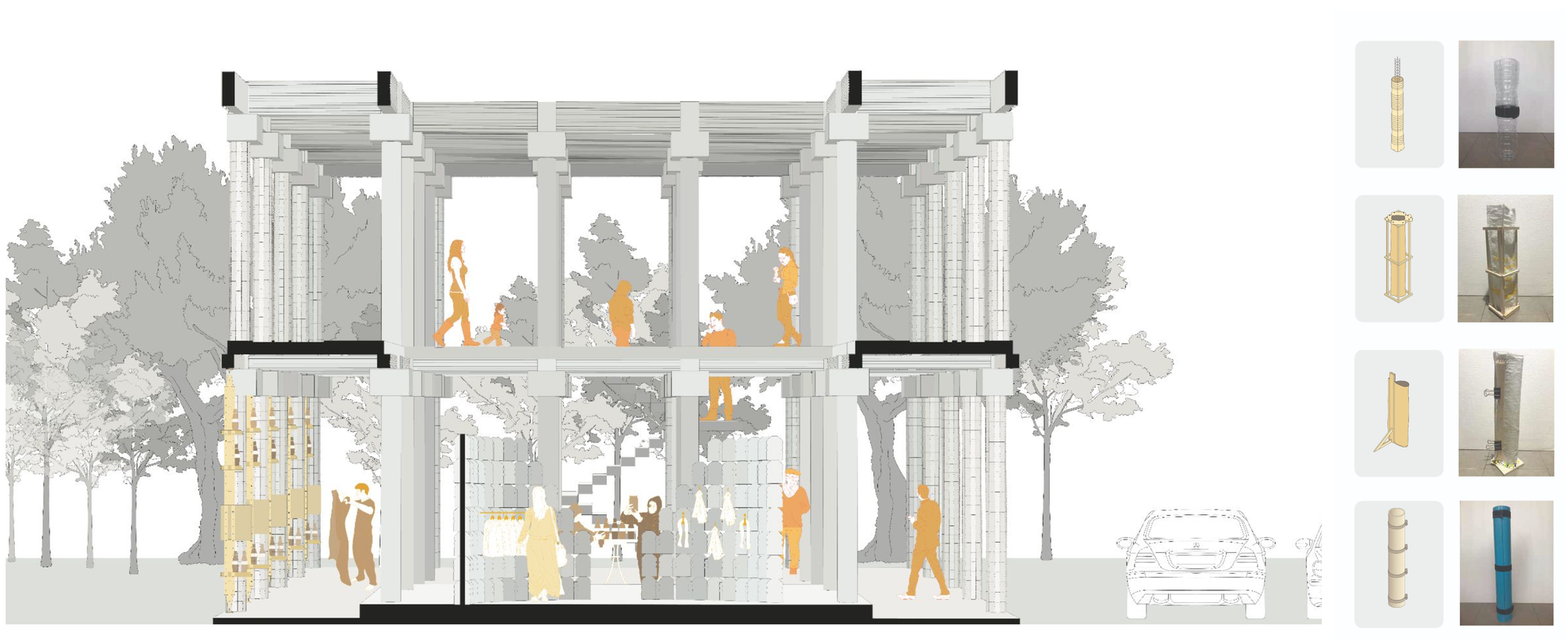
This post describes a fourth-year design studio brief I had written in 2019 for the International Program in Design and Architecture (INDA) at Chulalongkorn University in Bangkok.
Students:
Ging Kritnara Kroongjit, Hut Passakorn Suwanggool, Mark Yutthapong Charoendee, Oil Ananya Lappaichpoonpon, P Jirayu Ariyadilak, Pim Pimtawan Kaopatumtip, Sense Thanapat Itvarakorn, Win Thakolkiat Manorotkul